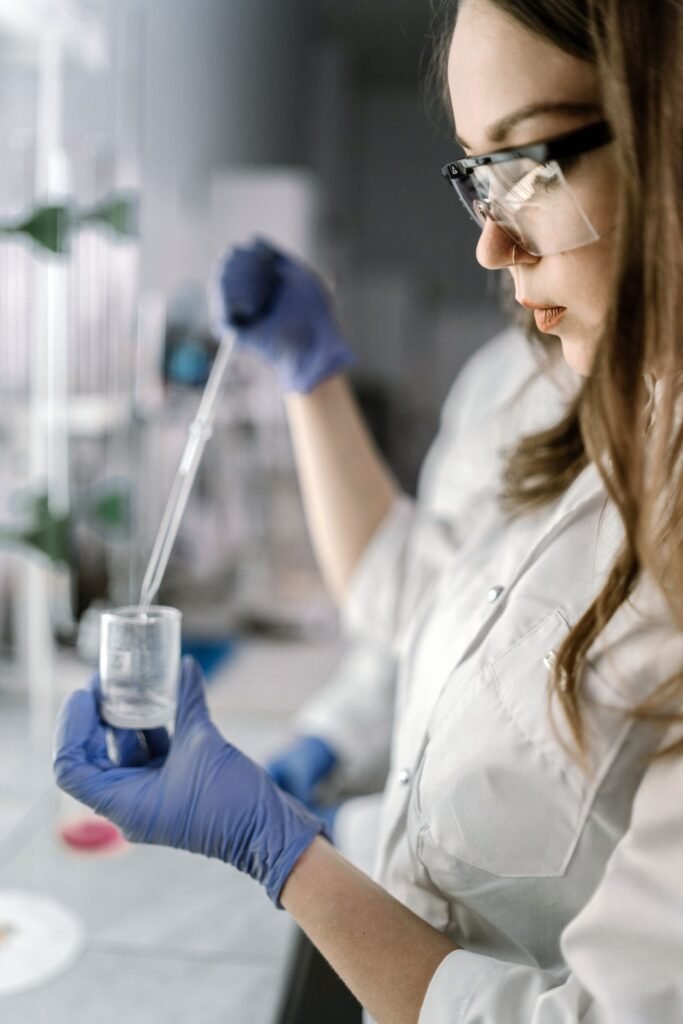
Research is not something that begins after a degree. It begins while you are an undergraduate — in a lab course, a small project, a paper you read properly, a question you follow for a few months. The students who go on to funded PhDs and research careers are rarely the ones who waited until their final year. They are the ones who started early, in small steps, and built the habits research requires: reading, questioning, doing, and writing down what happened. This guide explains how to start research undergraduate india, year by year, with no prior experience and no special access.
How to start research undergraduate india: the answer in short
Start in research as an undergraduate in India by doing four things, in order. First, protect your marks — most research programmes require at least 65% in core subjects from Class X onwards. Second, learn one useful skill properly, such as Python or a lab technique your college teaches. Third, read one paper a month in a field you like, and write a half-page summary of each. Fourth, do one small project — a course project, a lab experiment, or a literature review — and finish it. In your second year, apply to structured summer programmes such as the SRFP. In your third year, use a longer project or a dissertation to go deeper, and decide whether research is the career you want.
What research actually is
Research is not reading textbooks, and it is not memorising facts for an examination. Research is asking a question that does not yet have an answer, designing a way to test it, doing the work, and writing down honestly what happened — including what failed. An undergraduate does not need to discover something new. An undergraduate needs to learn the process: how to read a paper, how to keep a notebook, how to analyse a small dataset, and how to present a result. If you enjoy that process, research may suit you. If you want only certain answers, it probably will not.
First year: build the base
First year has three jobs, and none of them is applying for an internship — most national programmes will not take a first-year BSc student. The SRFP takes BS/BSc students in the second year only.
Marks. Most programmes require at least 65% in core subjects from Class X onwards, and the JNCASR programme also requires at least 60% in the previous semesters of your degree. First-year marks count. Protect them.
One skill. Learn one thing properly. For most science students that is Python for data analysis, or basic statistics, or a lab technique. One real skill beats five named on a CV.
Reading. Start the habit early: one paper a month, in a field you like, with a half-page summary. By second year you will have read twelve papers and you will be able to talk about a field — which is what an application, an email to a professor, or an interview asks for.
Also in first year: join a science club or student society, and attend a departmental seminar at least once a month. Research is a social activity — you learn it by being around people who do it.
Second year: your first real project
Second year is when research becomes real. Three things to do. Apply to structured summer programmes. The SRFP takes BS/BSc students in the second year only, and for the 2027 cycle applications closed on 30 November 2026, with the fellowship lasting about two months. The JNCASR programme takes first- and second-year BSc students in Life Sciences, with a fellowship of ₹12,500 per month (about $140) and travel support. The IISER Pune programme takes students in the 2nd, 3rd or 4th year of BSc, for 4 to 8 weeks in the summer. Apply to several — these programmes are competitive and merit-based.
Do a project at your own college. Ask a teacher in your department whether you can work on a small project — a lab experiment, a data analysis, a short literature review. Most teachers will say yes to a student who has read something and has a specific question. Agree on a question, a method, and a weekly meeting time. Keep a notebook. Write it up in two pages.
Learn to present. Offer to present your project to your class or club. Presenting is the fastest way to find out whether you understand your own work.
Third year and beyond: go deeper, and decide
In third year, the work gets longer and the decision gets real. Use a dissertation, a major project, or a longer internship to work on one question for several months rather than a few weeks. The TIFR Hyderabad VSRP, for example, takes final-year BSc students for an 8-week summer programme. By the end of third year you should be able to answer three questions: do I enjoy the daily work of research; which field do I want; and do I want a PhD, or would I rather use my science differently? There is no wrong answer to the third question. A student who discovers in third year that they prefer teaching, science writing, industry, or policy has made an informed choice instead of drifting into a PhD they do not want.
How to find a mentor in your own college
You do not need a famous professor to start in research. You need one teacher who will meet you regularly and take your work seriously. Find them by attending their classes, asking a question after a lecture, or reading one of their papers and asking about it. When you approach a teacher, be specific: name the topic, say what you have read, and ask whether you can work on a small project with them. Offer a regular time — one hour a week is enough. A mentor is not someone who gives you a project and disappears; it is someone who reads your work, corrects it, and tells you honestly when it is not good enough. One good mentor in your own college is worth more than a distant famous name.
Reading papers: the habit that changes everything
Reading research papers is the single habit that separates students who understand research from students who only study it. Start with review articles, which summarise a field, then move to primary papers. Read with a pen: write down the question, the method, the result, and the limitation. Use Google Scholar (scholar.google.com) to find papers and see who cited them, and arXiv.org (arxiv.org) for free preprints. Do not try to understand every equation on a first reading — understand the question and the result first. One paper a month, read properly, is worth more than twenty skimmed.
Common mistakes
- Waiting until final year. Research habits take a year to build.
- Reading without writing. A paper you have not summarised is a paper you will forget.
- Chasing famous names. One good mentor in your own college beats a distant famous professor.
- Doing many things shallowly. One skill, one project, one paper a month — depth beats breadth.
- Ignoring marks. The 65% threshold is real.
- Never presenting. If you cannot explain your work to others, you do not yet understand it.
Your checklist
- Marks protected — core-subject average at or above 65%
- One skill being learned properly
- One paper a month, each with a half-page summary
- One small project started at your own college
- One mentor found — a teacher who meets you regularly
- Lab notebook or research log started
- Second-year programmes noted with deadlines
- One presentation given
What to do next
Read the guide on getting a research internship with no prior experience (IC-004), and the step-by-step guide to finding a research internship in India (IC-001). If you are a BSc student, read the BSc guide (IC-002). Set up a free ORCID researcher identifier at orcid.org — it stays with you through your research career, and it costs nothing. Check the Research Guides hub and the Internships hub for current calls.
Frequently asked questions
When should an undergraduate start doing research in India? In first year, by building the base: marks, one skill, and reading. The first real project usually comes in second year — the SRFP takes BS/BSc students in the second year only.
Do I need to be at an IISER or IIT to do research as an undergraduate? No. There are seven Indian Institutes of Science Education and Research (IISERs), but research as an undergraduate starts at your own college: a project with a teacher, a science club, a paper read properly. The national summer programmes exist so students from any college can spend a summer at a research institute.
Sources checked
- Science Academies’ Summer Research Fellowship Programme 2027 — official application portal, webjapps.ias.ac.in/fellowship2027 — checked 19 November 2026 (BS/BSc second year only, 65% rule, 30 November 2026 deadline).
- JNCASR Summer Research Fellowship Programme — official page, jncasr.ac.in/academic/fandeprogrammes/srfp/ — checked 19 November 2026 (since 1991, two months April–July, ₹12,500 per month).
- IISER Pune Summer Student Programme 2026 — official project pages, iiserpune.ac.in/SummerStudentProgrammes — checked 19 November 2026 (2nd–4th year BSc, 4–8 weeks).
- TIFR Hyderabad Visiting Students’ Research Programme — official page, tifrh.res.in/academics/vsrp/ — checked 19 November 2026 (final-year BSc, 8 weeks May–July).
- ORCID — orcid.org — free persistent researcher identifier (checked 19 November 2026).
- arXiv.org — arxiv.org — open-access preprint server for physics, mathematics, computer science and related fields (checked 19 November 2026).
- Google Scholar — scholar.google.com — free search for scholarly literature (checked 19 November 2026).
- The statement that there are seven IISERs is from IISER Connect’s own editorial record; the institutes are at Berhampur, Bhopal, Kolkata, Mohali, Pune, Thiruvananthapuram and Tirupati.
- The one-skill / one-project / one-paper-a-month rhythm, mentor and presenting advice, and the third-year career decision are editorial guidance from IISER Connect, not rules stated by any institute.
- Currency conversions in this guide use about ₹88 to $1 and are labelled “about”.