The IISER Aptitude Test (IAT) is the entrance examination for admission to the Indian Institutes of Science Education and Research (IISERs), India’s premier institutes for science education and research. If you want to study science at an IISER after Class 12, IAT is the exam you need to understand first. This guide explains what IAT is, who can apply, the exam pattern, the syllabus, and how admission works, using only the official information published by IISER Admissions.
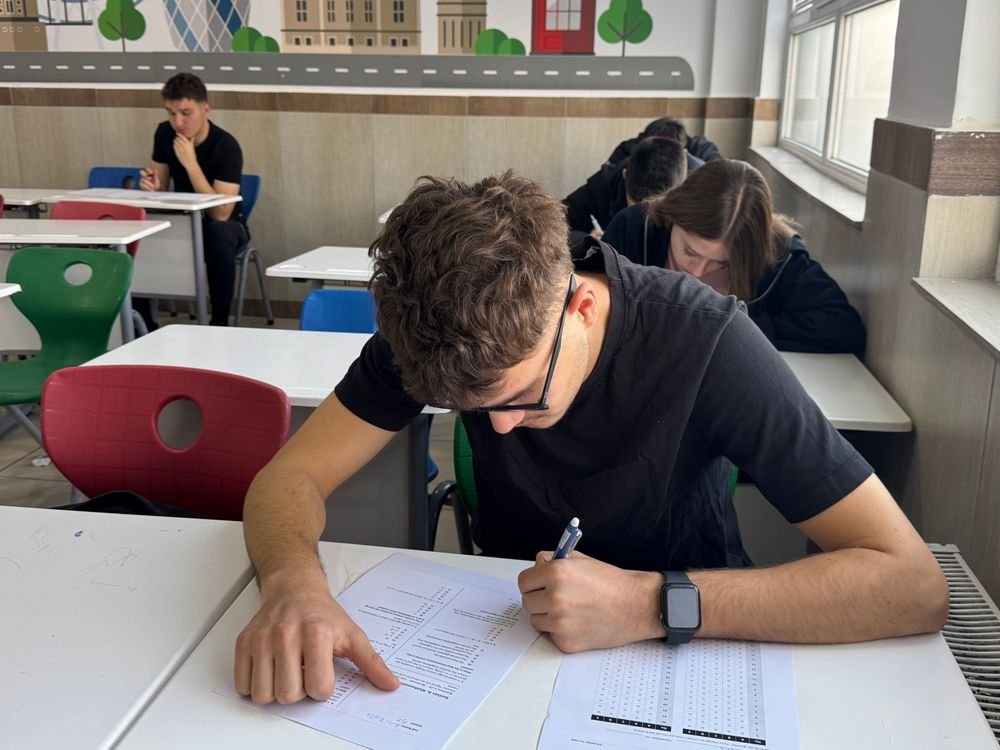
What is the IISER Aptitude Test (IAT)?
The IAT is a computer-based test conducted by the IISERs for admission to their undergraduate science programmes. It is the main route of admission to the IISERs: there is no separate admission through JEE or NEET for the IISER BS-MS programmes. The test assesses your understanding of Physics, Chemistry, Mathematics and Biology at the Class 11 and 12 level. IAT is held once a year, in a single session, at centres across India. In 2026, for example, the test was held on Sunday, 7 June 2026, from 9:00 AM to 12:00 Noon IST. The seven IISERs are located at Berhampur, Bhopal, Kolkata, Mohali, Pune, Thiruvananthapuram and Tirupati.
Who can apply for IAT?
To appear for IAT, you must meet the eligibility criteria published on the official IISER Admissions website. In brief:
- You must be an Indian national, an Overseas Citizen of India (OCI), a Person of Indian Origin (PIO) or a foreign national.
- You must have passed Class 12 (or equivalent) in 2024 or 2025, or be appearing for the Class 12 examination in the year of the test, from a board recognised by the Council of Boards of School Education (COBSE) in India.
- You must have taken at least three of the four subjects, Biology, Chemistry, Mathematics and Physics, during Class 12.
- You need a minimum aggregate of 60% in Class 12, counting all subjects. For candidates belonging to SC, ST and PwD categories, the minimum is 55%.
- There is no upper age limit mentioned in the official eligibility criteria.
Some programmes need Mathematics in Class 12: the 5-year BS-MS in Computational and Data Sciences at IISER Kolkata, the 4-year BTech at IISER Bhopal, the 4-year BS in Economic Sciences at IISER Bhopal, and the 4-year BS in Economic and Statistical Sciences at IISER Tirupati. Our companion guide, IAT Eligibility for Class 12 Students: Marks, Subjects and Age, covers these rules in detail.
Which programmes can you join through IAT?
The main programme offered through IAT is the 5-year BS-MS dual degree, available at all seven IISERs. In addition, IISER Bhopal offers a 4-year BS and a 4-year BTech, IISER Tirupati offers a 4-year BS, and IISER Kolkata offers a 5-year BS-MS in Computational and Data Sciences. IISER Bhopal also offers a 4-year BS in Economic Sciences, and IISER Tirupati offers a 4-year BS in Economic and Statistical Sciences. The BS-MS is the flagship programme: students spend the first years on foundational science courses and later specialise in Biology, Chemistry, Mathematics, Physics, Earth and Climate Sciences or other disciplines offered by their IISER.
IAT exam pattern at a glance
| Mode | Computer-based test |
| Duration | 180 minutes (3 hours) |
| Total questions | 60 |
| Questions per subject | 15 each in Biology, Chemistry, Mathematics and Physics |
| Question type | Multiple choice, one correct answer |
| Marks for a correct answer | +4 |
| Marks for a wrong answer | −1 |
| Marks for an unanswered question | 0 |
| Maximum marks | 240 |
Every question carries the same weight, and there is no sectional time limit: you can move between the four sections freely within the three hours. A detailed breakdown is in our guide IAT Exam Pattern and Marking Scheme Explained.
What is the IAT syllabus?
The IAT syllabus broadly follows the rationalised NCERT syllabus for Classes 11 and 12. That means your Class 11 and 12 NCERT textbooks for Physics, Chemistry, Mathematics and Biology are the core of the syllabus. The official syllabus document published on the IISER Admissions website lists the units for each subject. In Biology, the units include Diversity in the Living World, Human Physiology, Genetics and Evolution, and Ecology. In Chemistry, they include Chemical Bonding, Equilibrium, Electrochemistry, Chemical Kinetics and Organic Chemistry. In Physics, they include Mechanics, Thermodynamics, Optics and Modern Physics. In Mathematics, they include Algebra, Calculus, Vectors, Probability and Linear Programming. We list every unit in IAT Syllabus Explained: Physics, Chemistry, Mathematics and Biology.
How does admission through IAT work?
Admission through IAT follows these steps:
- Apply online on the IISER Admissions portal (iiseradmission.in) when applications open for the cycle. The application fee is paid when you submit the form: ₹2,000 for General, EWS, OBC and OBC-NCL candidates; ₹1,000 for SC, ST, PwD and Kashmiri Migrant candidates; and ₹12,000 for foreign nationals (2026 cycle; non-refundable).
- Download your admit card from the portal before the exam.
- Appear for the computer-based IAT at your allotted centre.
- A rank list is prepared from the marks scored out of 240. Note that not every candidate who appears for the test is awarded a rank: the rank cut-off is announced after the exam.
- Seats are allotted in rounds, based on your rank, your category, and the programme and IISER preferences you fill in.
- If you are allotted a seat, you complete document verification and pay the fees to confirm admission. Candidates who do not get a seat in the first round may be considered in later rounds if seats remain.
A rank does not guarantee admission: allotment depends on the number of seats, your rank and your preferences. In the 2026 cycle, the test was held on 7 June 2026 and the admission rounds ran through the summer, with the final withdrawal date on 14 September 2026. The schedule for the next cycle had not been announced on the official website at the time of writing, so check the official website for current dates.
Reservation in IAT admissions
Reservation in IISER admissions follows Government of India norms: 15% of seats for SC, 7.5% for ST, 27% for OBC-NCL, and 5% horizontal reservation for PwD candidates. Up to 10% of seats are reserved for the EWS category. Three seats per IISER are reserved for Kashmiri Migrants. OBC-NCL and EWS certificates must have been issued on or after 1 April of the admission year. For the 2026 cycle, that was 1 April 2026.
How should you prepare for IAT?
Because the syllabus is the NCERT syllabus, the most reliable preparation is a thorough study of the Class 11 and 12 NCERT textbooks, followed by regular practice of multiple-choice questions under timed conditions. Build your plan around the four subjects, give extra time to your weakest subject, and practise full-length mock tests in the final weeks so that you are comfortable with the 180-minute format and the negative marking. Our step-by-step plan is in How to Prepare for IAT: A Step-by-Step Study Plan.
IAT vs NEST: which exam should you take?
IAT and NEST are both national science entrance tests, but they lead to different institutes: IAT leads to the seven IISERs, while NEST leads to NISER Bhubaneswar and UM-DAE CEBS Mumbai. Both tests cover the same four subjects and are computer-based. The pattern differs: NEST has 80 questions with +3/−1 marking over 3 hours, and so do the eligibility rules and seat numbers. If you are aiming for a science research career, appearing for both exams keeps more options open. See IAT vs NEST: Which Exam Should You Take? for a full comparison.
Official sources
All the facts in this guide come from the official IISER Admissions website, iiseradmission.in, including the eligibility page, the IAT page and the official IAT syllabus document. Admission dates, fees and procedures change from cycle to cycle, so always confirm the current details on the official website before applying. At the time of writing, the official website still showed the 2026 cycle, and the schedule for the next cycle had not been announced.